Quick Summary
Pique is a textured, honeycomb-knit fabric (usually 200–260 GSM) that holds its shape, supports a stand-up collar, and takes embroidery cleanly — making it the default choice for corporate uniforms, golf brands, and workwear. Jersey is a smooth, single-knit fabric (usually 150–190 GSM) that drapes like a premium t-shirt, moves better on the body, and prints large graphics with sharper detail — making it the better pick for streetwear-leaning, athleisure, or fashion-forward polo lines. Neither fabric is objectively “better.” The right one depends on your branding method, your climate, and the image you want your polo to project. Below, we break down the construction, weight, decoration performance, and cost of each, so you can spec the correct fabric before you brief your manufacturer.
Why This Decision Matters More Than It Seems
Most brand owners treat “pique or jersey” as an afterthought — something the factory decides. That’s a mistake. The fabric knit determines how your polo drapes on a hanger, how it photographs on your e-commerce store, whether your embroidered logo sits flat or puckers, and how your team looks after eight hours in the field. If you’re building a corporate uniform program, launching a golf or workwear line, or spec’ing your first polo run as a private label brand, this is one of the few fabric decisions that touches design, production cost, and brand perception all at once — yet almost no resource actually walks decision-makers through it in plain language. That’s the gap this guide fills.
What Is Pique Knit Fabric?
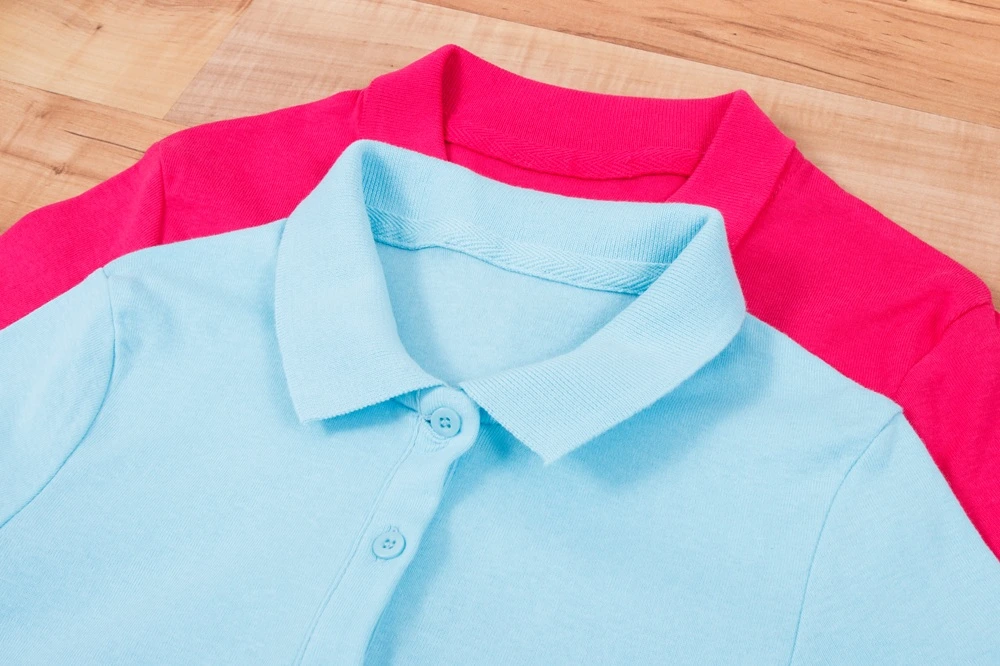
Pique (pronounced “pee-kay”) is a knit construction, not a fiber — you can find it in 100% cotton, cotton-polyester blends, or performance polyester. It’s built using a tuck stitch, where extra loops of yarn are pulled through at regular intervals, creating a raised, waffle-like or honeycomb surface. This is the fabric René Lacoste popularized in 1926 when he redesigned the tennis shirt for movement and breathability, and it’s the reason the “polo shirt” category exists at all.
Because of that 3D structure, pique fabric:
- Lifts slightly off the skin, creating airflow channels for breathability
- Holds a stand-up collar without heavy interfacing
- Resists distortion under embroidery tension
- Reads as more “structured” and premium at a glance
You’ll see it labeled as single pique (lighter, textured on one face) or double pique (thicker, more durable, textured on both faces). Combed cotton pique and pima cotton pique are the premium tiers most corporate and golf brands specify.
What Is Jersey Knit Fabric?
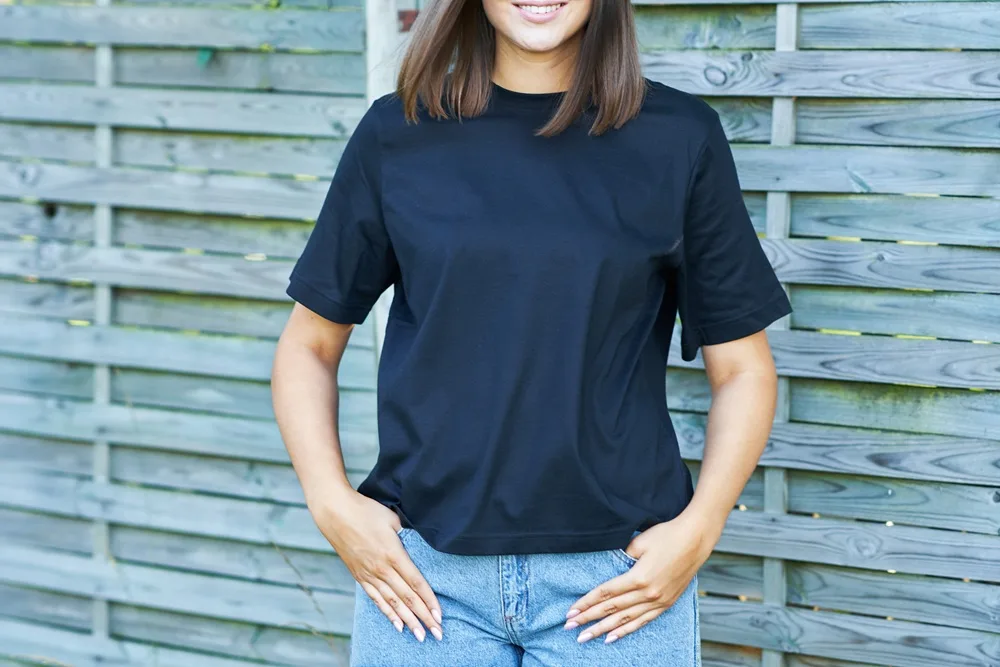
Jersey is a single-knit construction — the same base knit used in most quality t-shirts. It’s flat, smooth on the face, with fine horizontal ribbing visible on the back. Jersey polos essentially take a t-shirt fabric and add a collar and placket, which is exactly why they feel softer and more relaxed on the body.
Jersey fabric:
- Has a fluid, body-hugging drape
- Feels softer against the skin than pique
- Accepts fine, detailed screen printing and DTF transfers with sharper edges
- Is generally lighter in weight and lower in production cost
- Needs a reinforced or ribbed collar to avoid curling over time
Jersey is the fabric behind most “elevated tee” or fashion-polo hybrids you see in streetwear and casual retail lines.
Pique vs. Jersey: Side-by-Side Comparison
Attribute |
Pique Knit |
Jersey Knit |
| Surface texture | Honeycomb / waffle, raised | Flat, smooth |
| Typical weight | 200–260 GSM | 150–190 GSM |
| Drape | Structured, boxier | Fluid, body-hugging |
| Breathability | High — micro air channels | Moderate — clings when damp |
| Collar structure | Self-supporting | Needs reinforced/ribbed collar |
| Embroidery performance | Excellent — resists puckering | Prone to tunneling without heavy stabilizer |
| Screen printing / DTF | Fair — texture can break up fine detail | Excellent — smooth canvas for sharp graphics |
| Shrinkage risk | Higher (~5–7% if not pre-shrunk) | Lower (~3–4%) |
| Perceived formality | Business casual, uniform-ready | Casual, streetwear-adjacent |
| Best for | Corporate uniforms, golf, workwear, embroidered logos | Fashion polos, athleisure, large printed graphics |
Polo Fabric Weight (GSM) Explained
GSM (grams per square meter) tells you how heavy and opaque a fabric is — and it matters as much as the knit type itself. A cheap 160 GSM pique will still feel thin and see-through in white, while a well-spec’d 200+ GSM jersey can outperform a low-grade pique.
Under 160 GSM: Too light for most brand use. Risk of transparency, especially in white or pastel colors.
180–200 GSM: The sweet spot for everyday corporate and retail polos — enough structure without feeling heavy.
210–230 GSM: Standard for schoolwear, hospitality uniforms, and daily-wear workwear.
230–260+ GSM: Premium or heavy-duty programs — double pique, outdoor crews, or brands positioning as high-end.
Always ask your manufacturer to confirm GSM in writing on your tech pack. “Medium weight” means something different to every factory.
Best Fabric for Corporate Polos
If you’re outfitting a team, a sales floor, or a client-facing staff, pique cotton or a cotton-poly pique blend is almost always the safer call. Here’s why procurement teams default to it:
- The collar stays upright through a full shift without ironing
- It hides sweat patches and body contours better under office lighting
- Left-chest embroidered logos — the standard for corporate branding — sit flat and stitch cleanly
- It reads as “uniform” rather than “giveaway” at a glance, which matters for brand perception
The exception: if your team works in extreme heat with heavy physical activity and you’re printing (not embroidering) a large back or chest graphic, a heavier jersey (200+ GSM) with a reinforced collar can be the more practical choice.
Which Fabric Performs Better for Embroidery and Printing?
This is the single biggest factor buyers overlook — and it should usually decide the fabric, not the other way around.
Choose Pique if you’re embroidering
Pique’s dense, cellular structure anchors embroidery stitches without distortion. High-stitch-count logos (5,000+) sit flat with a lighter stabilizer backing, which also feels more comfortable against the skin.
Choose Jersey if you’re screen printing or using DTF
Jersey’s flat face is the better canvas for multi-color prints, fine text, and photographic detail. Ink and transfers sit evenly instead of breaking up over a textured surface. For large back prints or complex artwork, jersey wins.

How to Choose the Right Polo Fabric for Your Brand
- Define your decoration method first. Embroidered logo → lean pique. Printed graphic → lean jersey.
- Define your climate and use case. Hot, humid, high-activity → pique breathes better. Indoor, low-movement → either works.
- Define your brand tone. Structured and professional → pique. Soft, modern, streetwear-adjacent → jersey.
- Set your GSM target with your manufacturer before sampling, not after.
- Order physical swatches. Photos and PDFs never represent hand-feel or drape accurately.
Get a Custom Polo Shirt Quote →
Talk to a Clothing Manufacturer →
Start Your Own Clothing Brand →
Top Questions Real Buyers Are Asking Online
These are the recurring questions brand owners and menswear communities keep coming back to when this topic comes up on forums like Reddit:
“Why does my jersey polo collar curl after a few washes?” — Jersey lacks pique’s built-in structure, so the collar needs a ribbed knit or fused interlining to resist curling long-term.
“Is pique too hot for summer, or is that a myth?” — Myth, in most cases. The honeycomb texture actually creates airflow gaps, so cotton pique often breathes better than a dense jersey in heat.
“Which one looks less like a t-shirt with a collar sewn on?” — Pique, because its structured drape and firmer collar visually separate it from a t-shirt. A well-built jersey polo with proper collar reinforcement can close that gap, but it takes extra construction detail.
“Can I get my logo embroidered on a jersey polo, or should I switch fabric?” — You can, but expect puckering unless your manufacturer uses a heavy stabilizer. If your logo is dense or high-stitch-count, pique is the lower-risk choice.
“Is there a fabric that gives me both softness and structure?” — Yes — a mid-weight cotton-poly pique blend (roughly 190–210 GSM) or an enzyme-washed pique softens the hand-feel while keeping the collar and shape intact.
Frequently Asked Questions
Is pique or jersey more expensive to manufacture?
Pique generally costs more per yard than jersey because the tuck-stitch knit uses more yarn and takes longer to produce. Double pique costs more than single pique for the same reason.
Which fabric shrinks more?
Pique typically shrinks more (around 5–7% in length) than jersey (around 3–4%) unless it’s pre-shrunk or compacted. Ask your manufacturer to confirm pre-shrinking before bulk production.
Can I blend pique and jersey in the same polo?
Yes — many brands use a pique body with a jersey side panel, or vice versa, to balance structure with stretch. This is a common request in a custom tech pack for athletic-leaning polo programs.
What’s the most popular fabric for golf and uniform brands?
Cotton-poly performance pique, usually 180–200 GSM, remains the default because it balances breathability, structure, and embroidery compatibility.
Does fabric choice affect minimum order quantity (MOQ)?
It can. Specialty performance piques sometimes carry higher fabric MOQs than standard jersey, so it’s worth confirming with your cut and sew manufacturer before finalizing your design.
The Bottom Line
There’s no universal “better” fabric — only the better fabric for your specific brand, climate, and decoration method. If you’re building a uniform program, embroidering logos, or want a structured, professional look, pique is the safer default. If you’re designing a softer, fashion-forward polo with printed graphics, jersey will serve you better. What matters most is that the decision is intentional, written into your tech pack, and matched to your production method from day one — not left to whatever the factory happens to have on hand.
At Weft Apparel, we source and sample both pique and jersey knits in the GSM and blend your brand needs, and guide you through embroidery and screen printing decoration decisions before you commit to bulk production. Whether you’re outfitting a corporate team or launching your first clothing brand, we’ll help you pick the fabric that actually performs.
Shop Custom Polo Shirt Manufacturing →