Minimum order quantity in clothing is set mainly by fabric roll size and dye lot minimums, not sewing capacity, which is why a 50-per-colour-per-design MOQ is achievable without inflating your unit cost. This means 3 designs in 2 colors each require 300 total units (50 × 3 × 2), not 50 units flat. This guide breaks down why MOQ works this way and gives 7 levers to negotiate it further.
The Number That Sounds Small Until You Do the Math
“MOQ: 50 pieces” looks like the easiest yes in apparel sourcing. Then a buyer works out they want three designs, each in two colors, and the “50-piece minimum” quietly becomes a 300-unit order.
That’s not a bait-and-switch. It’s how minimum order quantity clothing manufacturing actually works; MOQ is almost always calculated per color, per design, not as one flat number across your whole collection.
Founders who don’t know this get burned twice: quoted a low number up front by one factory, then hit with a much higher one once colors and styles are factored in at PO stage. Understanding why the number multiplies the way it does is the first step to planning around it, and to negotiating it down where it actually can move.
What Is MOQ in Clothing Manufacturing?
MOQ, minimum order quantity, is the smallest number of units a manufacturer will produce in a single run. The detail that changes everything: that minimum reset for every design and every colorway within that design.
At Weft, MOQ starts at 50 units per color, per design. Order one hoodie design in black only, and your MOQ is 50 units, full stop. Add navy as a second colorway, and you’re now planning for 100 units total, 50 in each colour, because each colorway is its own fabric and dye commitment, not a subset of the first.
Here’s what surprises most first-time buyers: the sewing line is rarely the actual bottleneck. A cut-and-sew operation can stitch 50 units nearly as easily as 500. The real ceiling sits one step earlier, in the fabric.
Fabric Roll Minimums Set the Floor
Fabric is knitted or woven in efficient, large-batch runs, not made to order in small quantities. Reconfiguring a knitting machine for your custom spec, then switching it back for the next client, costs the mill real setup time, a cost that gets divided across your order.
Order too little fabric, and that setup cost is divided across too few units, which is exactly why factories with no fabric roll minimum in place quote high prices or turn small custom orders away entirely.
Dye Lots Add a Second Ceiling | Per Color
This is the piece that explains why MOQ resets per colorway specifically. A dye lot is a single batch of color run in a vat sized for efficient volume. Two separate dye lots can shade slightly differently, which is why a factory won’t split one color’s order across two dye runs when consistency matters.
Example: a dyehouse may need enough fabric volume to justify running the vat at all, a threshold that doesn’t shrink just because you only want a small quantity in that specific color. Each new color you add effectively opens a new dye lot commitment, which is exactly why MOQ compounds by color rather than staying flat across your whole order.
Greige Fabric Is the Shortcut Around It
Greige fabric is undyed, unfinished material straight off the loom or knitting machine. If a manufacturer already stocks greige fabric and you’re open to a pre-approved in-stock colour, the custom dye-lot threshold disappears; this is one of the fastest ways to access a genuinely low MOQ clothing manufacturer relationship.
Machine Set-Up Amortization Adds the Smallest Layer
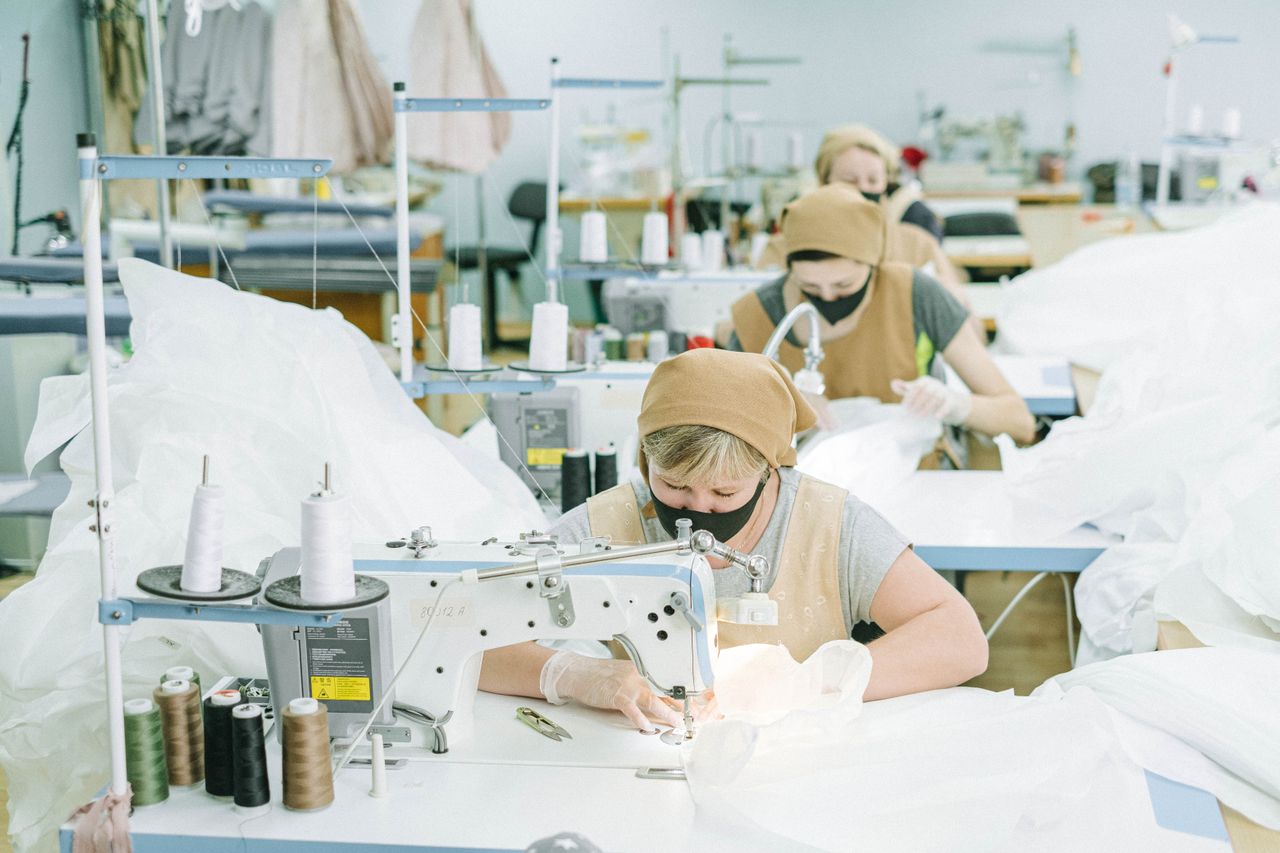
Setting up a sewing line, threading, tension calibration, pattern layout, takes real hours whether you’re producing 50 units or 5,000. That labor cost gets spread, or amortized, across however many units run through that setup.
It’s the smallest piece of the MOQ equation. It’s also the one most buyers assume is the whole story, which is why they end up negotiating with a sales rep about the wrong variable entirely.
Worked Example: What “50 Per Color Per Design” Actually Commits You To
Numbers make this concrete faster than definitions do. Here’s how a real product line adds up under a 50-per-colour-per-design MOQ:
| Scenario | Design | Colors per Design | Total Units |
| One design, one color | 1 | 1 | 50 |
| One design, two colors | 1 | 2 | 100 |
| Three designs, two colors each | 3 | 2 | 300 |
| Three designs, one core color + one accent color each | 3 | 2 | 300 |
The lever that actually controls your total commitment isn’t the per-unit MOQ, it’s how many color-design combinations you’re launching with. Cut your color count before you cut anything else.
Is MOQ Per Style or Per Color? (This Is Why It’s Both)
This exact confusion is the second most common complaint founders raise: quoted a flat minimum upfront, then hit with a separate per-color minimum once the PO is drafted.
The honest answer: it’s virtually always both, stacked together. MOQ is quoted per design and then multiplied again by however many colorways you choose within that design.
Ask this before you get a formal quote:
- Is the MOQ number you quoted me per design or per design per colorway?
- If I launch with one color instead of three, does my total order size change?
- Does a full-size run count toward the MOQ, or does it sit on top of it?
Get the answer in writing before you get attached to a number that turns out to mean something different at the PO stage.
7 Levers That Actually Move MOQ
Definitions of MOQ are everywhere online. A usable list of trade-offs you can offer in exchange for a lower number is almost nowhere. Here’s one.
1. Consolidate Your Colorways
Since MOQ stacks per colorway, cutting your color count is the single fastest lever. Launch each design in one core color instead of three, and your total commitment drops immediately, no renegotiation required.
2. Use Stock or Greige Fabric
Ask what greige fabric the factory already holds. A design that fits an existing in-stock color skips the custom dye-lot threshold entirely, often the single biggest reduction available.
3. Accept a Longer Lead Time
Factories reserve their fastest turnaround slots for their biggest clients. Offer to fill a gap in the production schedule instead of demanding priority, and some manufacturers will accommodate a smaller run because it fills otherwise idle capacity.
4. Commit to a Blanket Order Across Multiple Drops
A blanket order covers several future releases under one agreement, you commit to a total volume (say, 300 units) but take delivery across 2–3 smaller batches. The factory gets volume certainty; you get batches sized to what you can realistically sell before reordering.
5. Share a Size Run Across Designs
If two designs use the same base fabric and color, ask whether the factory will count them together toward one fabric roll minimum, even though they’re separate cut patterns.
6. Pay More Per Unit for Fewer Units
This is the trade most founders resist and often the fastest path to yes. Offering a higher unit price in exchange for a genuinely lower quantity turns a lot of “hard minimums” soft, because it solves the factory’s real cost problem instead of asking them to absorb it.
7. Bundle Designs That Share One Fabric
A hoodie and a crewneck in the same fleece and color can go into one fabric roll order, even as two separate finished products. The mill sees one larger yardage order instead of two small, separate ones.
Data point: stacking two or three of these levers together routinely takes a founder’s total order down by 40–60% from the “naive” per-color, per-design math, most often by cutting color count and bundling shared fabrics first.
MOQ vs. Unit Price: The Real Trade-Off
| Quantity (per colour, per design) | Approx. Unit Price | Trade-Off |
| 50 units | Highest tier | Weft’s entry point, smallest commitment, ideal for testing demand |
| 100 units | ~10–15% lower | Common sweet spot once one design proves out |
| 250 units | ~20–30% lower | Needs stronger sell-through confidence |
| 500+ units | Lowest per-unit cost | Best margin, highest dead-stock risk |
Notice where the curve flattens: the steepest price drop happens between 50 and 250 units, not between 250 and 500. Chasing the lowest possible unit price above that point often isn’t worth the inventory risk it creates for a smaller brand.
The Copy-Paste Email That Gets Results
Send this as your opening outreach or as a counter to a first quote.
Subject: MOQ flexibility for [Design Name], new brand, repeat-order potential
Hi [Name],
Thanks for the quote on [design/fabric]. A few things that might open up flexibility on quantity:
- We’re launching with [1–2] colorways per design, not a full range, so the per-color minimum shouldn’t stack as high as a multi-color order would.
- We’re open to in-house or stock fabric close to [color/GSM/fiber content] happy to review swatches.
- We’d consider a blanket order across [2–3] drops over [3–6] months, with a total committed volume of [X units].
- We’re open to a higher per-unit price for a lower minimum on this first run, since we’re validating demand before scaling.
Could you confirm: (1) is your MOQ per design or per design-per-colour, (2) what’s the sampling fee for this design, and (3) would any of the above move the number?
Looking to build a longer-term relationship, not just place one order.
[Your name]
That closing line does real work. Factories quote one-off buyers differently than brands signaling an ongoing relationship. Say it out loud.
Two Objections Worth Answering Directly
“What if the factory says no to everything?” Not every manufacturer flexes on every lever, but most flex on at least one. If color consolidation and stock fabric both get rejected, offering a higher per-unit price almost always opens the door, it solves the factory’s actual cost problem rather than asking them to absorb it for free.
“Isn’t paying more per unit just eating my margin anyway?” Compare it to the alternative: 300 units at a lower price with 200 sitting unsold isn’t cheaper, it’s cash tied up in inventory you’ll eventually discount. A smaller, fully sold-through run at a higher unit price protects margin better than a bigger run that doesn’t move.
Sampling Fee and Purchase Order: Get These Straight First
- Sampling fee: the cost of your prototype before committing to production. Separate from MOQ, which is usually non-refundable, sometimes credited against your first PO.
- Purchase order (PO): the binding order once design, color count, quantity, and timeline are all confirmed. Don’t sign until per-color MOQ and size run breakdown are in writing, not just discussed on a call, this is exactly the stage where the “separate per-color minimum” surprise tends to appear.
If you’re deciding between fully custom cut and sew apparel and a lower-commitment path, ask both options for their per-color, per-design MOQ up front, the comparison only means something once you’re comparing the same unit of measurement.
Can I Get Clothes Made With No Minimum Order?
Genuinely no-minimum production is rare in custom cut-and-sew. What’s usually available instead is print-on-demand or blank-garment decoration, flexible down to single units, but at a much higher per-unit cost and far less control over fabric and construction.
For most founders, the realistic goal isn’t zero minimum. It’s finding a low MOQ clothing manufacturer that starts at a genuinely achievable number and scales with the brand as demand grows, which is the entire premise behind Weft’s 50-per-colour-per-design starting point.
Get an MOQ That Matches Your Real Design Count
MOQ isn’t an arbitrary gate, it’s a byproduct of fabric roll minimums, dye lot economics, and machine setup amortization. Once you understand that “50 per color per design” stops being a confusing multiplier and starts being a number you can actually plan a launch around.
Know your design count and color count before you request a quote, and you’ll know your real order size before a sales call ever happens. If you’re also weighing a lower-commitment path to market, private label clothing is worth comparing against fully custom cut-and-sew on the same per-color, per-design basis.
Ready to see what your real order size looks like? Get a quote from Weft Apparel with your actual design and color count; we’ll show you exactly what it adds up to.
Frequently Asked Questions
What is MOQ in clothing manufacturing?
MOQ, or minimum order quantity, is the smallest number of units a manufacturer will produce in a single run. It’s typically set per design and multiplied again per colorway, driven mainly by fabric roll and dye lot minimums rather than sewing capacity.
Is MOQ per style or per color?
Almost always both, stacked together. A 50-unit MOQ per color, per design means three designs in two colors each requires 300 total units, not 50 flat, confirm this multiplication before finalizing a quote.
Can I get clothes made with no minimum order?
True no-minimum custom cut-and-sew is uncommon. Print-on-demand or blank-garment decoration offers flexible, even single-unit quantities, but at a higher per-unit cost and less control over fabric and construction than a low-MOQ manufacturer relationship.
Why do manufacturers set minimum order quantities?
MOQ is driven mainly by fabric economics, not sewing capacity. Mills need a minimum yardage to justify a knitting or weaving setup, and dye houses need a minimum volume to run one dye lot economically. Sewing line setup amortization adds a smaller floor on top.
How do I lower my MOQ without paying more per unit?
Consolidate colorways, use stock or greige fabric the manufacturer already holds, bundle designs that share the same fabric, or commit to a blanket order across a few future drops. Each reduces your effective total commitment without necessarily requiring a higher unit price.