Summary
A garment sold in the US generally needs a permanently attached label showing fiber content by percentage, the identity of the manufacturer or other responsible company (a company name or an FTC-issued RN number), and country of origin, plus care instructions that you have a reasonable basis to stand behind. Imported goods also carry a separate customs country-of-origin marking requirement. The rules come from the Textile Fiber Products Identification Act, the Wool Products Labeling Act, and the FTC Care Labeling Rule. This guide is general information, not legal advice; confirm specifics against the FTC’s own guidance or with a qualified adviser before printing labels.
The Compliance Problem Nobody Mentions Until It’s Expensive
Most founders treat label law as something that happens to large companies. Then a marketplace listing is pulled, or a retailer rejects a full delivery at the dock, and the question changes from “do we need this?” to “how fast can we reprint?”
It’s one of the most common surprises in private label. A sample arrives looking perfect; the neck label is crisp, the brand is beautiful, and nothing on it says what the garment is made of. Or the care symbols are there, but the instructions can’t be backed by anything the brand has tested. Or there’s no country of origin at all.
None of this is obscure. The rules are public, written by the Federal Trade Commission (FTC), and they are survivable once you see them laid out plainly. The trouble is that the source material reads as law, not as a to-do list. So this guide does the translation: what has to appear on the label, where, in what form, and how to check it before production starts.
One important note up front: this is general information, not legal advice. Labeling rules have exceptions, and the details of your product may change the answer. Treat this as a map, then check the FTC’s guidance directly or speak to a qualified adviser before you print anything.
The Three Laws Behind the Label
Three pieces of federal regulation do most of the work.
The Textile Fiber Products Identification Act covers most clothing. It’s why a label must say what the garment is made of, who is responsible for it, and where it was made.
The Wool Products Labeling Act covers products containing wool and adds its own detail about wool content, such as whether wool is new or recycled.
The FTC Care Labeling Rule (16 CFR Part 423) covers care instructions: how the garment should be washed, dried, ironed, and so on, and the evidence behind those instructions.
Separate from all three, goods brought into the country are also subject to customs marking rules administered by US Customs and Border Protection (CBP), which require imported articles to show their country of origin. That’s a different requirement from the Textile Act’s, and having one doesn’t automatically satisfy the other.
What Must Appear on the Label: The Checklist
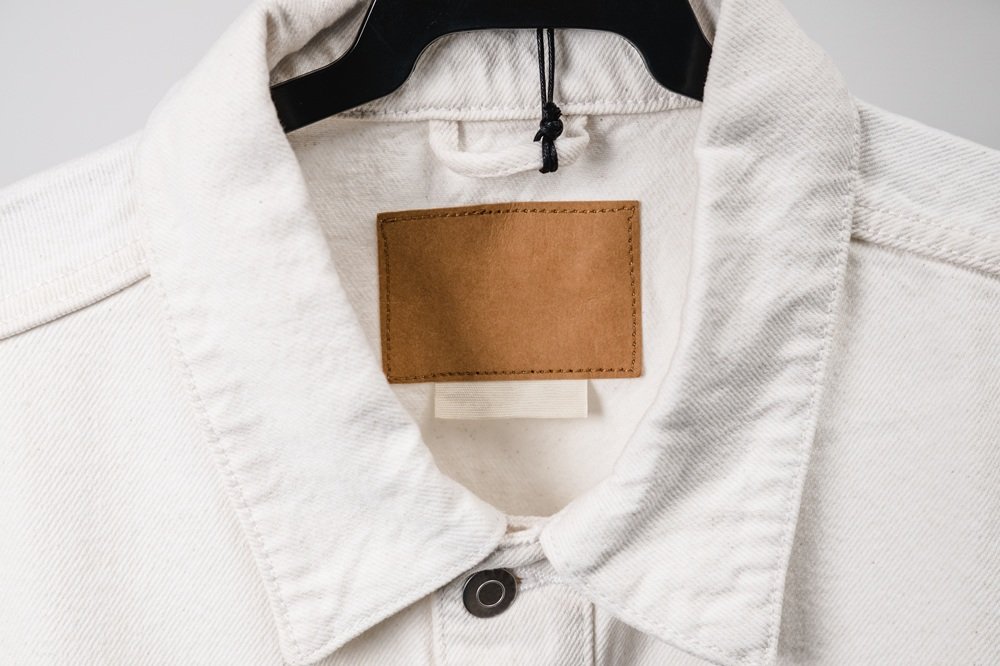
For a typical garment, the core required items are these.
- Fiber content, by percentage. The label lists the generic fiber names (cotton, polyester, and elastane) with each fiber’s percentage of the product’s weight, in descending order. Fibers making up less than 5% are generally grouped as “other fiber” or “other fibers,” with an exception for fibers that have a functional purpose, which can be named. Marketing names don’t substitute for generic names, so “Supima” is a brand claim, not a fiber name; the label still needs “cotton.”
- Who is responsible for the product. Either the name of the company (the manufacturer, importer, or other business marketing the product) or that company’s RN number. More on RN numbers below.
- Country of origin. The label must show where the garment was processed or manufactured, such as “Made in Vietnam.” Where “Made in USA” or similar claims are from the importer, the FTC applies a separate, stricter standard, which deserves its own legal review.
- Care instructions. Regular care instructions covering washing, drying, ironing, and bleaching where relevant, plus any warnings a consumer needs to avoid damaging the garment.
- English. The required information must appear in English. Additional languages are permitted alongside it.
A quick worked example makes the fiber rule concrete. Take a rib-knit tee made of 94% cotton, 4% polyester, and 2% elastane. Listed in descending order, the label reads “94% cotton, 4% polyester, 2% elastane” or, if you group the small fibers, “94% cotton, 6% other fibers” (with the functional-significance exception allowing elastane to be named). What it can’t say is “premium cotton blend” or “Pima cotton” in place of the breakdown. A tidy 100% at the bottom isn’t enough either: the percentages need to match the actual fabric, which is why we confirm composition with the mill before labels are printed.
Wool-containing products add wool-specific disclosures. Children’s products carry additional requirements outside the scope of this guide, so check those separately if you make them.
Where and How the Label Must Be Attached
The care label has to be permanently attached and legible for the useful life of the garment. A label that frays, washes out, or falls off after a few cycles doesn’t meet the standard, no matter how it looked on day one. Printed labels need to survive repeated washing, and sewn labels need robust stitching at every attachment point.
For fiber content, origin, and identity, the usual placement on a garment with a neckline is the inside center of the neck, midway between the shoulder seams. For garments without a neck, such as shorts or socks, the label should be somewhere a consumer can easily find it. Care instructions must be readily accessible to the consumer at the point of sale, which is why many centers sew a combined label at the neck and a separate care label at a side seam.
Printing directly onto the fabric (a heat-transfer or tagless print) is a common choice for comfort, and it’s legitimate, but it needs to hold up through the garment’s life. If you’re building a private label clothing range, label type and placement are worth deciding early, because they affect construction, cost, and comfort.
What an RN Number Is, and Who Needs One
An RN number (Registered Identification Number) is a number the FTC issues to a business so that it can appear on labels in place of the company’s full name. Brands often prefer it because it keeps the label short and because it ties the garment to a specific, traceable business.
You don’t have to use one. Printing your company’s name on the label meets the identity requirement. But if you want the shorter option, or a retailer asks for one, applying is straightforward: the FTC issues RNs at no charge through its online application, and you can use it across all your garments. Check the FTC’s current guidance on who is eligible, particularly if your business is based outside the US.
A practical point: the RN belongs to a business, not a product. If you change your legal entity or sell the brand, the registration needs updating.
Care Instructions You Can Actually Stand Behind
This is where many brands trip. The Care Labeling Rule requires that the instructions you give have a reasonable basis, meaning you have evidence that the garment can really be cared for the way the label says. Evidence can come from testing, from a fabric supplier’s data, or from reliable experience with similar products, but it has to exist.
The practical way to meet this is to wash-test before you finalize the label. Take a pre-production sample, wash and dry it exactly as the proposed instructions say, and check the result. Does it shrink beyond tolerance? Does the color bleed? Do trims warp? If the garment only survives a cold wash and a line dry, the label has to say so, even if “machine wash warm” would look nicer.
Two common errors:
- Over-promising. A label saying “machine wash, tumble dry” on a fabric that shrinks badly in a dryer isn’t just bad service; it’s a compliance exposure.
- Dry-clean-only without checking. If you say “dry clean only,” the garment has to be able to survive dry cleaning.
On symbols: the FTC rule allows care symbols from the standard ASTM D5489 system in place of words. Where an instruction doesn’t have a matching symbol, or where you want a warning such as “wash with like colors,” words are needed. Many brands print both symbols and short wording so customers and retailers aren’t left guessing. Whatever you choose, use the recognized symbol set consistently; invented or mixed symbol systems cause problems.
Anatomy of a Compliant Garment
A simple map of where each element typically lives:
[ NECK ]
+—————————-+
| Label A (inside centre |
| neck, midway between |
| shoulder seams): |
| – Brand / RN or company |
| – Fiber content (%) |
| – Country of origin |
+—————————-+
| |
| Label B (side seam): |
| – Care instructions |
| – Symbols and wording |
| |
+—————————-+
Hangtag (optional): size, brand story, extra care detail
Imported goods: customs country-of-origin marking, permanent
Hand this to your factory with your artwork so label placement is agreed before cutting, not improvised on the production line. The detail belongs in your tech pack, alongside every other construction call-out.
What Getting It Wrong Actually Costs
The legal exposure is real: the FTC enforces these rules, and violations can carry civil penalties. But for a small brand, the more immediate costs are commercial. A marketplace can delist a product or a whole seller account once it sees missing fiber content or origin. A retailer can reject a delivery at the dock, and “we’ll fix it next run” isn’t an answer when a full order is sitting in a warehouse. Re-labelling finished goods by hand and a re-sew job cost far more per unit than getting the label right at the artwork stage.
The cheapest moment to catch a label error is before production, which is why label review belongs on the approval log next to fabric and fit sign-off, not as an afterthought once cartons are packed.
Pre-Production Label Checklist
Run through this before approving label artwork:
- Fiber content lists generic names in descending order of percentage by weight
- Percentages add up to 100% and match the actual fabric (confirmed by the mill or a lab test)
- Fibers under 5% are grouped correctly or named only where functionally significant
- The company name or RN number is present and correct
- Country of origin appears, and customs marking requirements for imports are met
- Care instructions are supported by wash testing on the real fabric
- The care label is permanently attached and survives repeated washing
- Required text is in English
- Wool content disclosed if wool is present
- Label placement is specified in the tech pack and signed off on the sealed sample
- Children’s products checked against their separate requirements
- Legal review done before labels go to print
This is exactly the type of item our quality procedures cover at inspection: we check that what’s on the label matches what’s in the garment before goods ship. If your garments ship in branded packaging, custom packaging is worth planning at the same time, so any additional labeling on the pack is consistent with what’s on the product.
Frequently Asked Questions
What must legally be on a clothing label in the USA?
Generally: fiber content by percentage, the identity of the responsible company (name or RN number), country of origin, and care instructions. Information must be in English and permanently attached. Wool products and some other categories have additional requirements, and this is general information rather than legal advice.
Do I need an RN number?
No. You can put your company’s name on the label instead. An RN is an optional alternative the FTC issues for free, which many brands use to shorten their labels. Check the FTC’s guidance on eligibility, especially for businesses based outside the US.
Are care symbols alone enough on a US label?
The FTC rule permits recognized ASTM D5489 symbols in place of words. But if an instruction has no matching symbol, or you need a warning, words are required. Many brands print both for clarity. Whatever you use, the instructions must be backed by a reasonable basis, such as wash testing.
Where must the care label be attached?
It must be permanently attached and remain legible for the garment’s useful life, and consumers must be able to find it at the point of sale. Brands commonly sew it into a side seam or combine it with the neck label. Confirm exact placement requirements in the FTC’s guidance for your product type.
Does the country of origin have to be on the label?
For most garments, yes. The Textile Act requires it on the label, and imported goods also carry a separate customs marking requirement. “Made in USA” claims face a stricter standard, so seek legal review before using one.